Language
The Paris 2024 Olympic Games created an exceptional hospitality context: demand spikes, short stays, international guests, shifting schedules and a need for frictionless execution. RoomChecking helps teams anticipate workload, organise mixed cleaning and run field operations during an event where every minute counts.
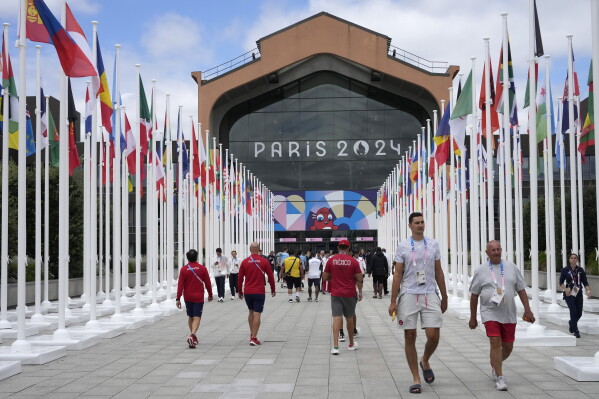
During a global event like the Olympic Games, hospitality doesn't work like a standard hotel operation. Teams have to manage irregular flows, grouped arrivals, short stays, scheduling constraints and heavy pressure on service quality.
RoomChecking adds an operational layer to forecast workload, structure cleaning and coordinate teams through modules such as Mix Cleaning and Work Forecast, both referenced on the RoomChecking page for the Paris Olympic Games case.
The Paris 2024 Olympic Games represented a unique hospitality challenge. For a few weeks, Paris welcomed international visitors, partners, teams, delegations and guests who came to experience something exceptional around the competitions.
In that context, hospitality cannot be run like a standard operation. Volumes change quickly, arrivals can come in groups, departures cluster into certain windows and the pressure on service quality is at its highest.
Paris 2024 and On Location offered hospitality packages combining tickets, accommodation, transport and experiences around the Games, which adds another layer of complexity between guest experience and field operations.
In an event-driven operation like the Olympic Games, the main problem isn't volume alone. It's unpredictability.
Teams have to handle workload peaks, rooms and spaces that must be turned around quickly, variable schedules, high quality standards and tight deadlines. A single coordination error has an immediate impact: a delay, a room that isn't ready, an overloaded team, poorly distributed tasks or a drop in perceived quality.
Manual methods show their limits fast in this kind of environment. A spreadsheet or a verbal dispatch can work on a stable day, but it becomes fragile as soon as volumes shift quickly and teams have to react in real time.
RoomChecking gives structure to that complexity around two key needs: organising cleaning and anticipating workload.
The Mix Cleaning module handles varied cleaning requirements adapted to different uses. In an Olympic context, not every space or stay follows the same logic. Some need a fast turnaround, others a lighter service, others a full preparation ahead of an important arrival. The RoomChecking page links the Paris Olympic Games case to “Mixed Hospitality” use cases and the Mix Cleaning module.
The Work Forecast module helps teams anticipate operational needs. The goal is to see high-load days coming, adjust resources and avoid teams discovering a workload peak too late.
In an event operation, the cost of a bad forecast is high.
If teams are understaffed, rooms and spaces aren't ready on time. If they're overstaffed, operating costs climb. If the schedule is too rigid, teams lose responsiveness. If it's too improvised, managers lose control.
Forecasting shifts the operation from reactive to anticipated. Managers can distribute teams better, prepare for peaks and smooth out the workload.
That matters especially at an event like the Olympic Games, where guest flows don't necessarily follow the usual rhythms of hotel operations.
The source page doesn't provide usable figures on the gains achieved, so no percentage or hours-saved claim should be invented here.
The benefit to highlight is operational: RoomChecking helps teams organise cleaning better, anticipate workload and reduce their dependence on manual decisions during high-pressure periods.
In an event context, that value is direct: less confusion, better distribution of work, stronger anticipation and more stable execution.
The Paris Olympic Games case shows that RoomChecking isn't only for traditional hotels.
The platform can also support temporary, hybrid or event-driven operations, where demand swings hard and teams have to stay coordinated under pressure.
The real subject isn't cleaning. It's the ability to turn an unstable environment into a more predictable operational system.
For a hospitality operation tied to the Olympic Games, service quality depends as much on the visible experience as on the invisible coordination behind it.
RoomChecking provides the structure to manage mixed cleaning, anticipate workload and help teams stay aligned through activity peaks.
For hotels, residences, event groups and hospitality operators facing demand spikes, RoomChecking becomes a clear lever: forecast better, allocate better and execute better.