Language
The Social Hub combines hotel, student housing and long-stay accommodation in one community-driven concept. With sites exceeding 600 rooms across several buildings, teams have to handle very different cleaning rhythms, guest expectations and maintenance needs. RoomChecking helps The Social Hub automate schedules, balance workloads and coordinate operations without creating chaos.
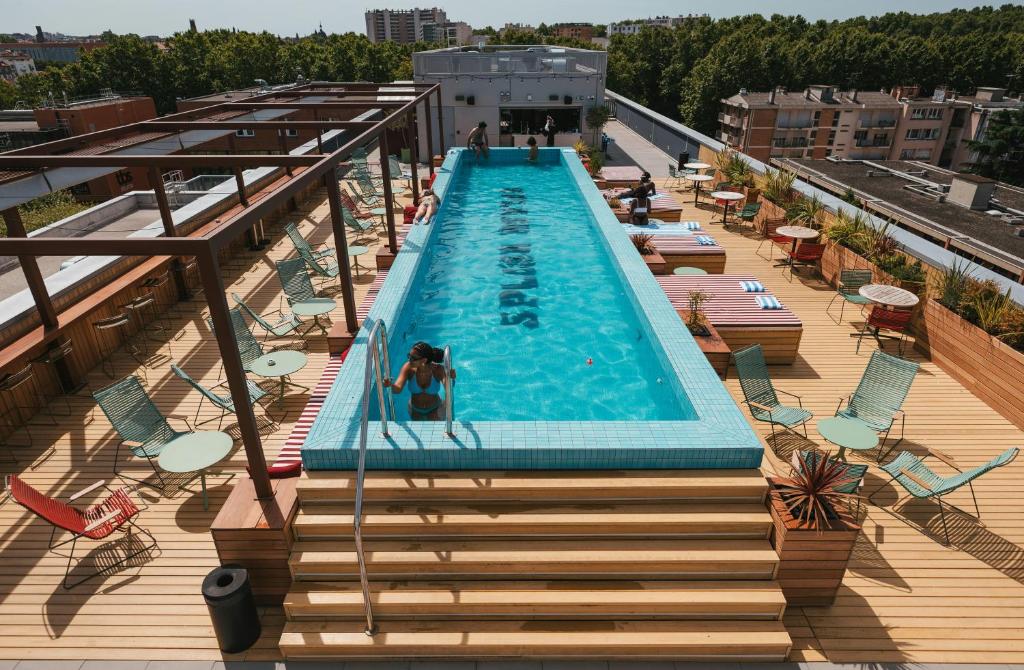
The Social Hub is not a traditional hotel. Its hybrid model brings together three uses: students, long-stay guests and hotel guests. Each segment has its own expectations, its own cleaning frequency and its own operational constraints.
With RoomChecking, The Social Hub automates cleaning schedules by stay type, rate code and PMS data via Mews. Teams can distribute work better across buildings, avoid unnecessary cleaning, cut down manual assignment and improve maintenance responsiveness.
The Social Hub reinvents hospitality by combining several uses in one place: student housing, long stays, hotel rooms, communal spaces and social life. That hybrid model creates a lively, flexible experience suited to very different guest profiles.
But that commercial richness also creates real operational complexity. Unlike a traditional hotel, The Social Hub doesn't manage a single type of stay with a relatively predictable cleaning rhythm. Some sites exceed 600 rooms spread across several buildings, and the group operates around 15,000 rooms in total, with guests who don't share the same expectations or service needs.
So the challenge isn't simply cleaning rooms. It's running a hybrid model where each guest type gets the right level of service, at the right moment, without wasting the teams' resources.
In a standard hotel, cleaning schedules follow a fairly simple model: departures, arrivals, stayovers and the priorities of the day. At The Social Hub, the logic is far more segmented.
Students receive monthly cleaning on fixed floors and days. Long-stay guests need a weekly service aligned with their arrival schedule. Hotel guests expect daily cleaning or an alternating service depending on their stay.
That diversity makes manual planning hard to sustain. Without an automated system, teams risk creating duplicates, missing rooms, cleaning spaces that don't need it or distributing workload badly across buildings.
The business risk is clear: wasted resources, less consistent service, team fatigue and a loss of operational control on large sites.
RoomChecking turns that complexity into structured workflows.
Cleaning schedules are automated based on rate codes, service types and PMS data through a deep integration with Mews. Tasks adapt to the guest type, the length of stay and the level of service expected. The Social Hub has configured up to 89 distinct cleaning rule types across its guest profiles and service needs.
Workflows are segmented for students, long-stay guests and hotel guests. Teams know which rooms need cleaning, when and at what frequency. That logic reduces confusion and avoids unnecessary cleaning.
One design decision makes the hybrid model workable: the system cleans bookings, not rooms. The same room 101 can operate as a hotel room, a long-stay unit, student housing, an office or a house-use room depending on the current reservation, and the rule follows the booking rather than the room.
RoomChecking also helps distribute work intelligently across multiple buildings. Workloads are balanced so that some team members aren't overloaded while other zones sit under-used.
Maintenance is built into the operational model too. Teams can be pre-assigned to buildings or floors depending on the day, which reduces manual dispatch and speeds up response in the field.
Hopr adds a forecasting layer by identifying high-demand days from historical cleaning data. Because student cleans and extended stays follow predefined calendars, some days are structurally heavier than others, and that anticipation lets managers adjust staffing before the pressure builds.
This is strategically important for The Social Hub: in a hybrid model, the problem isn't only executing today's tasks. It's also anticipating peaks, smoothing workload and making sure teams aren't at the mercy of the schedule.
With RoomChecking, The Social Hub has sharply reduced its dependence on manual assignment. The source page reports an 80% reduction in manual task assignment and supervision.
Work is distributed more evenly across large multi-building campuses. Teams gain visibility, schedules become more predictable and cleaning happens only when it's actually needed.
That improves operational efficiency, but also team morale. A clearer, better balanced and more predictable schedule reduces daily friction.
Maintenance benefits from better organisation as well. Response times are shorter and preventive maintenance becomes easier to manage.
The Social Hub case shows that hybrid models need tools built for complexity.
A PMS alone isn't enough to orchestrate day-to-day field work. You need an operational layer capable of turning booking data, guest types, service frequencies and building constraints into concrete tasks for teams.
RoomChecking plays that role: automating the logic, reducing manual dispatch, balancing workload, avoiding unnecessary cleaning and making maintenance smoother.
The real value isn't just time saved. It's the ability to scale a hybrid model without losing operational control.
For The Social Hub, RoomChecking provides the operational foundation a hybrid hospitality concept requires.
The platform handles multiple guest types, multiple cleaning frequencies, multiple buildings and multiple service levels without multiplying tools or manual intervention.
For hybrid operators, student housing, coliving, aparthotels and multi-use hotels, RoomChecking offers a clear answer: turn field complexity into an automated, predictable, scalable system.
.png)